Water heater relief valve leaking or dripping: what it means
The temperature and pressure relief valve is the most important safety part on a water heater. When it drips, it's usually telling you something about your water pressure.
Updated October 21, 2026 · 5 min read · By the Heater Doctor team
Short answer
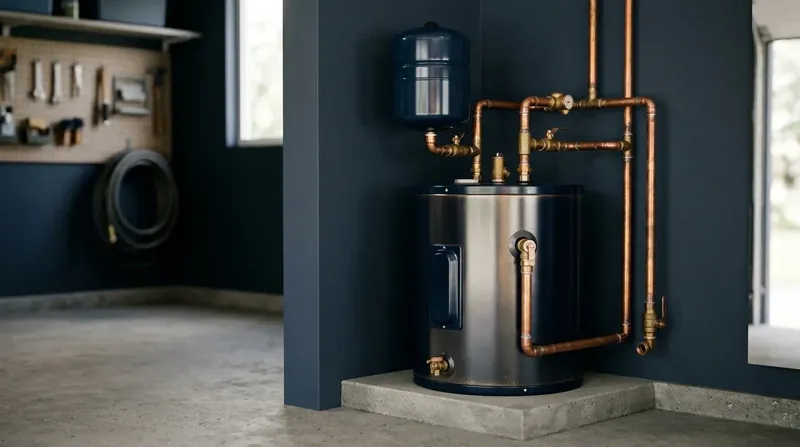
Occasional dripping usually means pressure in the tank is rising as water heats in a closed plumbing system, called thermal expansion. A large gush of hot water means the water got too hot. Constant leaking can mean a worn valve. Never cap or plug the valve. A plumber can check your water pressure and add an expansion tank or pressure-reducing valve if needed.
What the valve does
The T&P valve opens to let water out if the tank gets too hot or the pressure gets too high. Watts, a major valve maker, says these valves open when the water in the heater reaches 210°F, or at the valve's pressure set point, typically 150 psi. A. O. Smith warns that if the valve doesn't work, the tank can over-pressurize and explode.
Dripping now and then
A. O. Smith's technical bulletin says intermittent weeping or dribbling means the valve is relieving pressure. In a closed system, pressure climbs as water heats. That's thermal expansion, and Watts says it's the typical cause of dripping.
Many homes have a check valve or pressure-reducing valve at the meter that keeps expanding water from flowing back to the street. With nowhere to go, the pressure builds until the relief valve lets some out. A thermal expansion tank gives that water somewhere to go.
A big gush of hot water
A sudden discharge of very hot water means the valve opened on temperature, A. O. Smith says. That points to a thermostat or gas control problem. Turn off the heater and call.
Leaking at the threads
Water seeping around where the valve screws into the tank is a connection leak. The valve needs to be removed and resealed. Rust or corrosion at that fitting can also be an early sign the tank itself is going.
Check your water pressure
The International Plumbing Code calls for a pressure-reducing valve where static water pressure in a building exceeds 80 psi. An inexpensive pressure gauge on a hose spigot tells you yours. Some systems run high: Post Falls, Idaho, for example, reports 65 to 75 psi on average, higher in the south of town (see our Post Falls page).
A. O. Smith advises controlling water pressure and installing a thermal expansion tank before replacing a dripping relief valve. Otherwise a new valve will just drip too.
What not to do
- Never cap, plug or remove the relief valve or its discharge pipe.
- Don't ignore it. Watts notes that a valve left dripping can build up minerals and eventually block, which defeats its purpose.
- Don't test it if it's old and you've never opened it. It may not reseal. A. O. Smith says to inspect it once a year, and have a professional look every five years.
Rather have a plumber look at it?
Call and describe what's happening. We'll get a plumber out to diagnose and fix it.
Call for service(858) 465-8561Local pages mentioned
Related water heater services
Water Heater Repair
Gas, electric and tankless repairs, from pilot lights to heating elements.
Learn more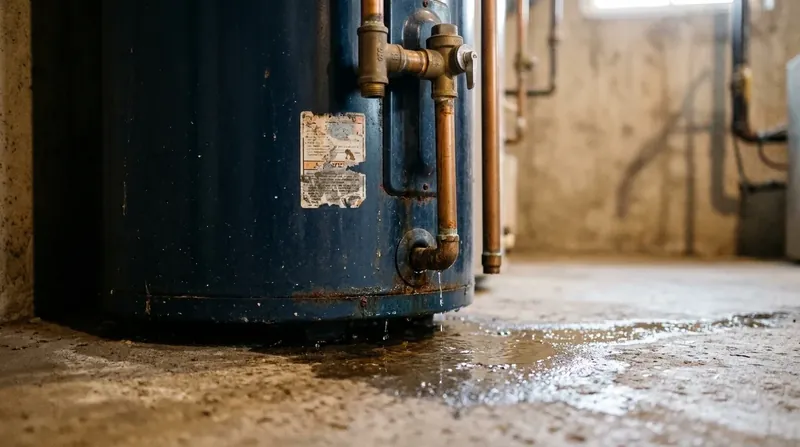
Leaking Water Heater
Water around the tank or a dripping relief valve. Act before it floods.
Learn more
Emergency Water Heater Repair
Burst tank, gas smell or water everywhere. Call right away.
Learn moreCommon questions
Is a dripping relief valve dangerous?
The drip itself means the valve is doing its job. The danger is ignoring the cause, or plugging the valve. Have the pressure checked.
Can I just replace the relief valve?
If the valve is worn, yes, but A. O. Smith advises fixing the pressure first with an expansion tank or pressure control, or the new valve will drip too.
Why is water coming out of the pipe next to my water heater?
That pipe is usually the relief valve's discharge line. Water there means the valve opened. Small drips point to pressure, a gush points to overheating.
Sources
- Watts, T&P and ASME Safety Relief Valves
- A. O. Smith, Technical Bulletin 52: Leaking Temperature and Pressure Relief Valve
- A. O. Smith, Water Heater Maintenance Guide
- International Plumbing Code 2021, Section 604.8
- City of Post Falls, 2023 Consumer Confidence Report
General information only. Gas, electrical and pressure work can be dangerous; when in doubt, call a licensed professional.
Still stuck? Get a plumber out.
Call now for water heater repair or replacement.